

Table of Contents
- A Clear Introduction to Operation Barbarossa
- Why Hitler Launched Operation Barbarossa
- How Operation Barbarossa Was Planned and Launched
- Early Fighting, Rapid Gains and the Limits of Operation Barbarossa
- Operation Barbarossa and the Holocaust in Occupied Territories
- Teaching and Interpreting Operation Barbarossa Through Wartime Context
- FAQ: Common Questions About Operation Barbarossa
- Explore Your Next Steps
By The Ration Room Team
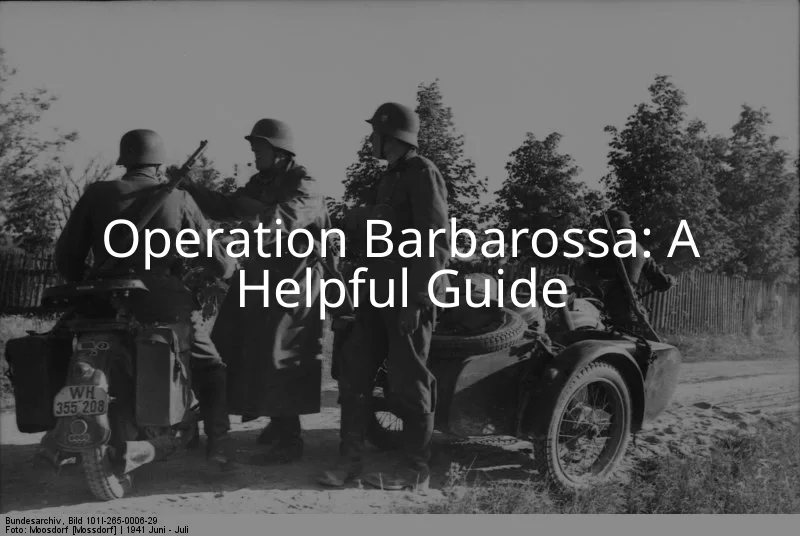
Operation Barbarossa was the German invasion of the Soviet Union, launched on 22 June 1941. It is widely regarded as the largest German military operation of the Second World War. Any study of operation barbarossa quickly becomes more than a campaign narrative, because the invasion also marked a decisive turning point in both the wider war and the Holocaust.
Military history explains one part of the story. The invasion brought vast armies into action across a front stretching from the Baltic Sea to the Black Sea. The speed of the first German advances, the scale of the attack and the early destruction inflicted on Soviet forces all shaped the opening phase of the eastern war.
Yet the invasion cannot be understood through battlefield events alone. From the beginning, German authorities intended a war of annihilation. Mobile killing units followed behind the front, and occupation policies brought mass murder and immense civilian suffering. That is why the invasion remains essential to understanding how military decision-making, ideology and occupation policy became intertwined in 1941.
A Clear Introduction to Operation Barbarossa
Operation barbarossa was the codename given to Nazi Germany’s invasion of the Soviet Union on 22 June 1941. The United States Holocaust Memorial Museum describes it as “the largest German military operation of World War II”, a definition that immediately signals both its scale and its significance.
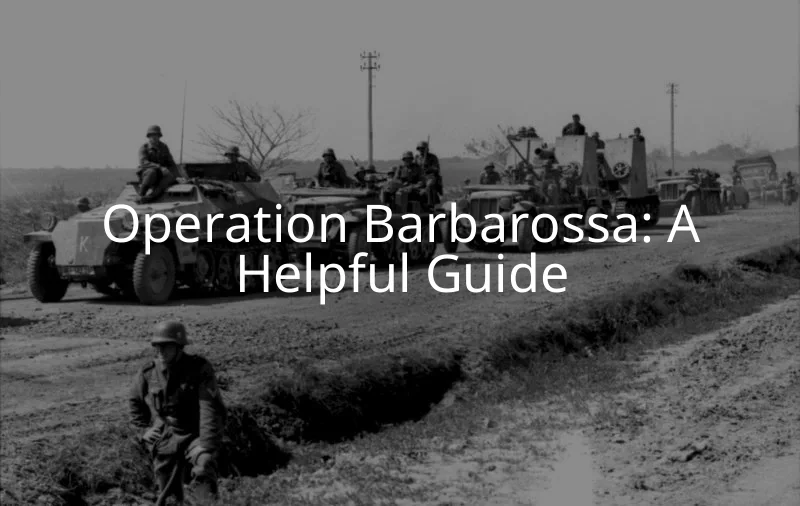
The invasion followed less than two years after the German-Soviet nonaggression pact. In practical terms, the invasion opened a huge new theatre of war in eastern Europe. German troops, supported by Axis allies, struck across a broad front. By the end of 1941, according to the same source, German forces had advanced hundreds of miles and reached the outskirts of Moscow.
For readers approaching the invasion for the first time, two themes matter from the outset. The first is military scale. Germany and its allies assembled more than 3,500,000 troops for the attack. The second is historical consequence. The USHMM states that the German attack on the Soviet Union “marked a turning point in both the history of World War II and the Holocaust.”
That dual importance is central to any serious account of the invasion. On one level, it was an immense campaign shaped by operational planning, surprise and brutal fighting. On another, it marked a sharp escalation in Nazi violence. Soon after the invasion, mobile killing units began the mass murder of Soviet Jews, and wider occupation policies led to catastrophic losses among prisoners of war and civilians.
Why Hitler Launched Operation Barbarossa
To understand why Hitler launched operation barbarossa, it is necessary to begin with long-standing Nazi goals. The USHMM explains that core policies of the Nazi movement included “the destruction of the Soviet Union by military force”, “the permanent elimination of the perceived Communist threat to Germany”, and the seizure of land as Lebensraum, or “Living space”, for long-term German settlement.
In that sense, the invasion was not a sudden improvisation. The German-Soviet nonaggression pact of August 1939 was treated by Hitler as temporary. The same USHMM source states that in July 1940, only weeks after the conquest of France and the Low Countries, Hitler decided to attack the Soviet Union within the following year.
Primary-source material preserved by The Avalon Project’s judgement on the aggressive war against the Soviet Union shows that German planning proceeded despite the nonaggression pact. The judgement states that “as early as the late summer of 1940, Germany began to make preparations for an attack on the U.S.S.R., in spite of the nonaggression pact.” It also records testimony that planning under the code name “Case Barbarossa” was being developed by September 1940.
A key document for operation barbarossa is Führer Directive No. 21, issued on 18 December 1940. The USHMM notes that Hitler signed Directive 21, code-named Operation “Barbarossa”, as “the first operational order for the invasion of the Soviet Union.” The Avalon text adds a revealing line from the directive itself: “The German armed forces must be prepared to crush Soviet Russia in a quick campaign before the end of the war against England.”
That phrase helps explain German expectations. The invasion was planned as a rapid and decisive offensive. The directive is also important because it shows intention, not hindsight. It gives historians a direct route into how German leaders framed the invasion before it began.
The Avalon judgement also points to wider planning connected to occupation and exploitation. German authorities considered the economic possibilities of Soviet territory, while political and economic structures for occupied lands were discussed in detail. So the invasion was both a military invasion and part of a much larger project aimed at destroying Soviet power and remaking eastern territories under German control.
How Operation Barbarossa Was Planned and Launched
Operation barbarossa was launched on 22 June 1941. Its scale remains one of the most striking features of the campaign. The USHMM states that Germany and its allies assembled “more than 3,500,000 troops for the attack.” Within that force, “more than three million German soldiers” were supported by “650,000 troops from Germany’s allies.”
The opening assault came across a vast geographical front. According to the USHMM, three army groups attacked the Soviet Union “from the Baltic Sea in the north to the Black Sea in the south.” This broad-front attack helps explain why the invasion has such a large place in modern military history. It was not a local offensive, but a continental-scale invasion.
Surprise was another crucial factor. The USHMM records that Soviet leadership “had refused to heed warnings from the Western powers of the German troop buildup along its western border.” As a result, Germany and its Axis partners achieved “almost complete tactical surprise.” In the opening phase, “much of the existing Soviet air force was destroyed on the ground.”
Those early blows had immediate consequences. Soviet armies were initially overwhelmed, and German units encircled millions of Soviet soldiers. The USHMM notes that many of those cut off from supplies and reinforcements “had few options other than to surrender.” This helps explain the rapid early progress of the invasion, especially in the first weeks and months.
The invasion was also tightly bound to secrecy and timing. The Avalon material records that Directive No. 21 called for the completion of preparations by 15 May 1941 and warned that “Great caution has to be exercised that the intention of an attack will not be recognised.” Even where the later timetable shifted, the wording underlines how carefully the invasion was prepared as a surprise assault.
Early Fighting, Rapid Gains and the Limits of Operation Barbarossa
The first phase of the invasion produced swift German advances. The USHMM notes that by the end of 1941 German troops “had advanced hundreds of miles to the outskirts of Moscow.” This movement, combined with the encirclement of Soviet armies, created an image of relentless momentum in the early months of the invasion.
Much of that momentum came from the destruction and dislocation inflicted at the frontier. Soviet formations were caught by surprise, parts of the air force were destroyed on the ground, and large numbers of soldiers were trapped in encirclements. The invasion therefore appeared, at least initially, to match the German expectation of a quick campaign.
Even so, the campaign’s early success does not tell the whole story. The scholarship overview from Cambridge highlights “the interaction of strategic aims, logistical shortfalls and intense early fighting.” That phrasing is useful because it avoids presenting the invasion as either inevitable triumph or instant failure. Instead, it points to a complex campaign in which major gains coexisted with serious strain.
Strategic aims were expansive from the outset. German leaders intended to crush Soviet Russia quickly while also pursuing far-reaching political and ideological goals. Yet large ambitions placed great pressure on planning and supply. At the same time, the early fighting itself was intense. The invasion was not simply a matter of movement over open ground. It was a campaign of vast distances, heavy combat and escalating demands.
That is also why historians continue to read the campaign through more than one lens. The first lens is operational, focused on movement, surprise and battlefield outcomes. The second examines whether German war aims were too wide for the means available. The third asks how the ideological nature of the invasion shaped decisions on the ground. Together, those approaches help explain why the campaign could begin with such force and yet become central to Germany’s defeat in the east.
Operation Barbarossa and the Holocaust in Occupied Territories
Operation barbarossa was not only a military invasion. It also marked a decisive shift in occupation policy and the Holocaust. The USHMM states that “from the beginning of operational planning, German military and police authorities intended to wage a war of annihilation” against the Soviet Union’s government and its citizens, “particularly the Jews.”
This point is essential. The invasion opened space for mass violence behind the front lines as well as combat at the front. During the winter and spring of 1941, the USHMM explains, Army High Command officials and the Reich Security Main Office negotiated arrangements for the deployment of Einsatzgruppen. These units would operate behind the advancing armies.
The USHMM describes the Einsatzgruppen as “mobile killing units” and states that they “would conduct mass shootings of Jews, Communists, and other persons deemed to be dangerous to establishing long-term German rule on Soviet territory.” Soon after the invasion, these units began the mass murder of Soviet Jews. In this respect, the invasion is inseparable from the history of the Holocaust in eastern Europe.
The wider civilian catastrophe was also immense. The USHMM states that “German military and civilian occupation policies led to the deaths of millions of Soviet prisoners of war and Soviet civilians.” It further notes that German military planning included the expectation that “tens of millions of Soviet citizens would starve to death as the intentional result of German occupation policies.”
These facts change how the invasion must be interpreted. It was not a conventional campaign to be measured only by territory gained or lost. It was a war shaped by ideological goals, racial persecution and deliberate policies that targeted civilians as well as armed forces.
Teaching and Interpreting Operation Barbarossa Through Wartime Context
Using Museum and Classroom Materials
For teachers, museum teams and public historians, the invasion is often most effective when placed within the wider story of the Second World War. Military chronology matters, but so does context. The source overview notes that Imperial War Museums resources and The National Archives learning materials can support public and educational interpretation suited to schools, museums, reenactors and theatre.
That broader framing is useful because the invasion links several major wartime themes at once: ideology, invasion, occupation, civilian suffering and the Holocaust. A museum or school session may therefore use the campaign not as an isolated eastern front episode, but as part of a larger explanation of how the war changed during 1941.
Linking the Eastern Front to Home Front History
This wider approach also matters for organisations focused on everyday wartime life. The Ration Room is a UK-based company dedicated to preserving the look and feel of everyday life during the 1940s. The website states that replicas are created from original packaging and government-issue designs. That makes its range especially relevant when educators want to place the invasion within a broader wartime landscape rather than teach the eastern front in isolation.
For many British audiences, home front objects can provide a practical route into discussion. A lesson or display about the invasion may sit alongside material on evacuation, identity documents, rationing or wartime paperwork, helping people understand that the global war connected distant battlefronts with everyday civilian life.
The Ration Room’s audience includes collectors, educators, schools, museums, theatres, film and television productions, reenactors, history enthusiasts and gift buyers interested in the British wartime home front and the 1940s. In educational settings, that kind of replica material can support displays, storytelling and contextual interpretation without claiming to recreate the eastern front itself.
FAQ: Common Questions About Operation Barbarossa
What Was Operation Barbarossa?
Operation barbarossa was the codename for Nazi Germany’s invasion of the Soviet Union on 22 June 1941. The USHMM describes it as “the largest German military operation of World War II.”
When Did Operation Barbarossa Begin?
Operation barbarossa began on 22 June 1941, when German forces invaded Soviet territory without a declaration of war, as recorded in the Avalon judgement material.
Why Did Germany Launch Operation Barbarossa?
The USHMM states that long-standing Nazi goals included destroying the Soviet Union by military force, removing the perceived Communist threat and seizing land as Lebensraum. Those aims shaped the invasion from the start.
Why Did German Leaders Expect a Quick Victory?
Directive No. 21 is the clearest evidence. The Avalon text quotes it as saying that the German armed forces must be prepared to “crush Soviet Russia in a quick campaign.” This shows that the invasion was planned as a rapid offensive.
Why Is Operation Barbarossa Important in Holocaust History?
Operation barbarossa matters because mobile killing units followed behind the front, and mass shootings of Jews began soon after the invasion. The campaign also marked a wider shift toward occupation policies that brought catastrophic civilian losses.
Was Operation Barbarossa Only a Military Event?
No. The invasion was both a military campaign and a turning point in occupation policy, persecution and mass murder. That is why it is central to the history of both the war and the Holocaust.
Explore Your Next Steps
If your interest in operation barbarossa leads you into the wider wartime context, The Ration Room offers British 1940s replica items for display, education and theatre. As a UK-based company dedicated to preserving the look and feel of everyday life during the 1940s, it focuses on faithful replica packaging and ration memorabilia for schools, museums, collectors and productions.
For classroom tables, display cases and interpretation work, the following products are especially relevant:
- WW2 History Prop Set – £14.99
- Child’s WW2 Prop Set – £10.99
- Wartime Travel Document Set – £13.99
- Kitchen Replica Gift Set – £39.99
These items relate to the British wartime home front rather than the invasion itself, but they can help educators and interpreters build richer Second World War displays around identity, paperwork, domestic life and public memory.
To learn more about the company and its approach, visit the About page. For direct enquiries, including education and trade interest, use the Contact page.
Sources: United States Holocaust Memorial Museum overview of the invasion of the Soviet Union; Avalon Project judgement on the aggressive war against the Soviet Union; Cambridge University Press material on Operation Barbarossa and Germany’s defeat in the east; Imperial War Museums Holocaust Galleries guide; The National Archives wartime education lesson material.