

Dunkirk Evacuation (1940): The Remarkable Story of Resilience and Heroism
The Dunkirk Evacuation of 1940 is a story of bravery and determination in the face of overwhelming odds. After being encircled by German forces, the British Expeditionary Force, along with French and Belgian troops, found themselves trapped on the beaches of Dunkirk. The situation seemed hopeless, but a massive rescue operation was launched to save the soldiers.
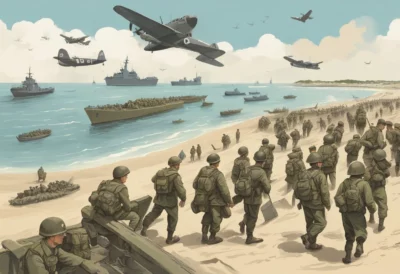
Operation Dynamo, as it was called, involved the mobilisation of hundreds of naval vessels and the recruitment of civilian boats to ferry the soldiers across the English Channel. The “Little Ships of Dunkirk,” as they came to be known, played a crucial role in the evacuation. Despite being under constant threat from German air attacks, they managed to transport over 300,000 Allied troops to safety.
The Dunkirk Evacuation was a turning point in World War II and a symbol of the resilience of the British people. It remains one of the most remarkable stories of the war and a testament to the bravery of the soldiers and civilians who took part in the operation.
Key Takeaways
- The Dunkirk Evacuation of 1940 involved the rescue of over 300,000 Allied troops who were trapped on the beaches of Dunkirk.
- Operation Dynamo was launched to save the soldiers and involved the mobilisation of hundreds of naval vessels and the recruitment of civilian boats.
- The “Little Ships of Dunkirk” played a crucial role in the evacuation and transported thousands of soldiers to safety despite being under constant threat from German air attacks.
The Prelude to Evacuation
In May 1940, the German army had successfully invaded and occupied Belgium, the Netherlands, and Luxembourg. The British Expeditionary Force (BEF) and the French army were pushed back to the northern coast of France, where they were trapped by the German army. The situation was dire, and the Allied forces faced the prospect of being captured or killed.
The BEF, commanded by General Lord Gort, established a defensive line around Dunkirk, a port city on the northern coast of France. The French army was to the south of the BEF, and the German army was closing in from all sides. The situation was bleak, and the BEF was running out of time.
On May 24, 1940, the British War Cabinet decided to evacuate the BEF and other Allied troops from Dunkirk. The plan, codenamed Operation Dynamo, involved the use of naval vessels and civilian boats to ferry the troops across the English Channel to safety. The plan was risky, as the German army was closing in on Dunkirk, and the evacuation would have to be carried out under heavy fire.
Despite the risks, the evacuation proceeded, and the “Little Ships” played a crucial role in the operation. The boats, ranging from pleasure cruisers to fishing boats, were manned by civilian volunteers who braved the dangerous waters of the English Channel to rescue the stranded troops. The “Little Ships” became a symbol of British resilience and determination in the face of adversity.
In the end, over 300,000 Allied troops were evacuated from Dunkirk, including 140,000 French soldiers. The evacuation was a remarkable achievement, and it provided a much-needed boost to British morale during a dark period of the war.
The Encirclement of Allied Forces
German Offensive
On May 10, 1940, the German army launched a massive offensive against France and the Low Countries. The German forces quickly overran the Netherlands and Belgium, forcing the Allied troops to retreat. The German army then turned its attention to France, launching a massive attack through the Ardennes forest. The French and British forces were caught off guard, and the Germans quickly broke through the Allied lines.
Allied Retreat
The Allied forces were quickly pushed back towards the English Channel. The British Expeditionary Force, along with French and Belgian troops, found themselves encircled by the German army. The situation was dire, and it seemed that the Allied forces would be completely destroyed.
However, the Allied forces were able to hold out long enough for a daring rescue operation to be launched. A flotilla of civilian boats, known as the “Little Ships,” sailed across the English Channel to rescue over 300,000 Allied troops. The evacuation, codenamed Operation Dynamo, was a remarkable feat of organisation and bravery, and it saved the lives of thousands of Allied soldiers.
Despite the success of the evacuation, the Battle of Dunkirk was a major defeat for the Allied forces. The Germans were able to capture a large amount of equipment and supplies, and the loss of so many troops was a major blow to Allied morale. However, the evacuation of Dunkirk was a turning point in the war, and it showed that the Allied forces were capable of fighting back against the German army.
Operation Dynamo
Planning and Strategy
The planning and strategy for the Dunkirk evacuation, codenamed Operation Dynamo, began on May 20, 1940. The operation was led by Vice Admiral Bertram Ramsay and was devised to rescue the British Expeditionary Force and other Allied troops from the beaches of Dunkirk.
The plan involved the use of naval vessels, merchant ships, and civilian boats to evacuate the troops. The Royal Navy provided the bulk of the vessels, while the civilian boats, known as the “Little Ships,” were used to ferry soldiers from the beaches to the larger vessels.
Execution
The evacuation began on May 26, 1940, and continued for nine days. The operation was carried out under constant German bombardment and aerial attacks. Despite the difficult conditions, the operation was a success, and over 338,000 Allied soldiers were rescued.
The success of the operation was due to the bravery and determination of the soldiers, sailors, and civilians involved. The soldiers fought a valiant rearguard action to hold off the German forces while the evacuation took place. The sailors and civilians risked their lives to sail across the English Channel and rescue the soldiers from the beaches.
In conclusion, Operation Dynamo was a remarkable achievement that demonstrated the resilience and heroism of the British people. The operation was a turning point in the Second World War and gave a much-needed boost to British morale.
The Little Ships of Dunkirk
The Little Ships of Dunkirk were a flotilla of around 850 private boats that sailed from Ramsgate in England to Dunkirk in northern France between 26 May and 4 June 1940. These boats played a crucial role in the evacuation of over 300,000 Allied troops from the beaches of Dunkirk during World War II.
The majority of these boats were pleasure craft, fishing boats, and other small vessels. They were manned by civilian crews, who volunteered to take part in the rescue mission. The boats were not designed for warfare, and many were not even seaworthy. However, they were able to navigate the shallow waters close to the beaches, where the larger naval vessels could not go.
The Little Ships were a lifeline for the stranded soldiers, who were under constant attack from German forces. They shuttled back and forth between the beaches and the larger naval vessels, ferrying soldiers to safety. The boats were often overloaded, and the crews worked tirelessly to ensure that as many soldiers as possible were rescued.
The bravery and determination of the civilian crews who manned the Little Ships of Dunkirk played a vital role in the success of Operation Dynamo. Without their efforts, many more soldiers would have been killed or captured by the advancing German forces. The Little Ships are a testament to the spirit of the British people and their willingness to help those in need, even in the face of great danger.
Casualties and Losses
Allied
The Dunkirk evacuation, also known as Operation Dynamo, was a success in terms of the number of Allied soldiers rescued. Over 338,000 British and French troops were safely evacuated from the beaches of Dunkirk to England between May 26 and June 4, 1940 [1][2]. However, the operation was not without casualties.
The British Expeditionary Force (BEF) suffered approximately 68,000 casualties during the Battle of Dunkirk, including 11,000 killed, wounded, and missing in action [1]. The French also suffered significant losses, with estimates ranging from 30,000 to 90,000 [2].
German
The German army suffered relatively few casualties during the Dunkirk evacuation. However, they did lose a significant amount of equipment and supplies [1]. The Luftwaffe, the German air force, was responsible for most of the damage inflicted on the Allied forces during the evacuation. They sank or damaged over 200 ships, including 6 destroyers, and destroyed many of the Allied planes on the ground [2].
Despite the losses suffered by both sides, the Dunkirk evacuation was a turning point in the war and a symbol of Allied resilience and determination in the face of adversity.
[2] Britannica
Aftermath and Impact
Military Implications
The Dunkirk evacuation was a significant turning point in World War II. Despite losing much of their equipment and vehicles, the British Expeditionary Force and their Allies were able to save a significant number of troops. This allowed them to regroup and continue fighting the war. The evacuation also prevented the capture of a large number of troops, which would have been a significant blow to the Allied war effort.
Political Repercussions
The Dunkirk evacuation had a significant impact on British politics. Prime Minister Winston Churchill’s leadership during the evacuation boosted his popularity and helped him maintain his position as Prime Minister. The evacuation also helped to strengthen the relationship between Britain and the United States. President Roosevelt was impressed by the bravery and resilience of the British soldiers and offered his support to Britain.
Cultural Influence
The Dunkirk evacuation has had a lasting impact on British culture. The bravery and heroism of the soldiers and civilians involved in the evacuation have been celebrated in books, films, and other media. The phrase “Dunkirk Spirit” has become synonymous with British resilience and determination in the face of adversity. The evacuation has also become a symbol of the importance of civilian courage and solidarity in times of war.
Overall, the Dunkirk evacuation was a defining moment in British history. It demonstrated the strength and resilience of the British people and their Allies in the face of overwhelming odds. The military implications, political repercussions, and cultural influence of the evacuation continue to be felt to this day.
Controversies and Criticisms
Despite the success of the Dunkirk evacuation, there were some controversies and criticisms surrounding the operation. One of the main criticisms was the decision to abandon heavy equipment, such as tanks and artillery, which were left behind in France. This decision was made to prioritise the evacuation of soldiers, but it meant that the British army lost a significant amount of equipment.
Another criticism was the lack of air support during the evacuation. The Royal Air Force was heavily engaged in air battles over France and Belgium, and many planes were lost. This meant that the Luftwaffe had almost complete control of the skies over Dunkirk, and Allied troops were left vulnerable to air attacks.
There were also concerns about the treatment of French soldiers during the evacuation. The French army had fought alongside the British, but many French soldiers were left behind in Dunkirk and were subsequently captured by the Germans. Some critics argued that the British had abandoned their French allies, while others pointed out that the French had their own evacuation plan in place.
Despite these controversies and criticisms, the Dunkirk evacuation remains one of the most remarkable events of World War II. The bravery and determination of the soldiers and civilians involved in the operation ensured that over 300,000 Allied troops were rescued from almost certain capture or death.
Frequently Asked Questions
What happened during the evacuation of Dunkirk?
During the evacuation of Dunkirk, over 300,000 Allied troops were rescued from the beaches of Dunkirk, France. The troops were surrounded by German forces, and the situation was dire. The evacuation involved a flotilla of civilian boats, known as the “Little Ships,” which sailed across the English Channel to rescue the soldiers. The operation lasted from May 26 to June 4, 1940.
Why was the evacuation of Dunkirk considered a miracle?
The evacuation of Dunkirk was considered a miracle because it was a successful operation against all odds. The British Expeditionary Force, along with French and Belgian troops, was surrounded by German forces and faced almost certain death or capture. However, the Little Ships were able to rescue over 300,000 Allied troops, which was a significant boost for British morale.
What role did the Little Ships play in the Dunkirk evacuation?
The Little Ships played a crucial role in the Dunkirk evacuation. The Royal Navy was unable to rescue all of the troops, so civilian boats were called upon to help. The Little Ships, which included fishing boats, pleasure craft, and ferries, were able to navigate the shallow waters and rescue soldiers from the beaches. They ferried the troops to larger boats waiting in deeper waters, which then transported them to England.
How many Allied troops were rescued during the Dunkirk evacuation?
Over 300,000 Allied troops were rescued during the Dunkirk evacuation. This included soldiers from the British Expeditionary Force, as well as French and Belgian troops. The operation was a significant success, considering the dire situation the troops were in.
What impact did the Dunkirk evacuation have on World War II?
The Dunkirk evacuation had a significant impact on World War II. It was a significant boost for British morale, as it showed that the Allies were capable of successful operations against the Germans. It also allowed the British Expeditionary Force to regroup and continue to fight in the war. The evacuation also led to the famous “We shall fight on the beaches” speech by Winston Churchill, which further boosted morale and inspired the British people.
What strategies were used during the Dunkirk evacuation?
The Dunkirk evacuation involved several strategies, including the use of the Little Ships and the Royal Navy. The troops were also protected by the Royal Air Force, which provided air cover during the operation. The evacuation was also carried out in stages, with troops being rescued from the beaches and then transported to larger boats waiting in deeper waters. Overall, the operation was a success due to the coordination of these various strategies.