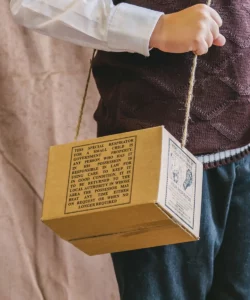

During World War Two, the threat of gas attacks was a very real and terrifying possibility. As a result, the British government issued gas masks to the entire population, including children. The Child’s WW2 Gas Mask Box was an essential piece of equipment for young children during this time.
The gas mask box was designed to be worn by children aged two to five years old and was made from cardboard. The box featured straps that allowed it to be worn over the child’s shoulder, leaving their hands free. The gas mask itself was stored inside the box and was made from rubber, with glass eye-pieces and a filter to protect against gas attacks.
The Child’s WW2 Gas Mask Box remains an iconic symbol of the war and is often used in museums and historical reenactments to give visitors a sense of what life was like during this difficult time. Despite the fear and uncertainty of the war, the gas mask box was a practical and necessary piece of equipment that helped keep children safe from harm.
Historical Context of Gas Masks in WW2
Development of Gas Masks During World War I
During World War I, the Germans were the first to use chlorine gas as a weapon in April 1915, which caused widespread panic and death. This led to the development of gas masks, which were designed to protect soldiers from the deadly effects of gas. The first gas masks were crude and ineffective, consisting of a simple cotton pad soaked in urine or sodium thiosulfate.
As the war progressed, gas masks were improved with the introduction of activated charcoal, which was effective in absorbing poisonous gases. By the end of the war, gas masks had become more sophisticated and were widely used by soldiers on both sides.
Advancements Leading to WW2 Child’s Gas Mask
By the time World War II broke out, gas masks had become a standard issue for soldiers and civilians alike. The British government issued gas masks to every man, woman, and child in the country, and it was compulsory to carry one at all times.
The child’s gas mask was specifically designed to fit the smaller faces of children. It was made of black rubber and had a metal filter attached to the front. The filter contained a layer of activated charcoal, which was effective in absorbing poisonous gases.
The gas mask was carried in a specially designed cardboard box, which was labelled with the child’s name, age, and school. The box also contained an instruction leaflet, which explained how to use the mask in the event of a gas attack.
Overall, the development of gas masks during World War I and the advancements made leading up to World War II played a crucial role in protecting soldiers and civilians from the deadly effects of gas attacks.
Design and Features of Child’s Gas Mask
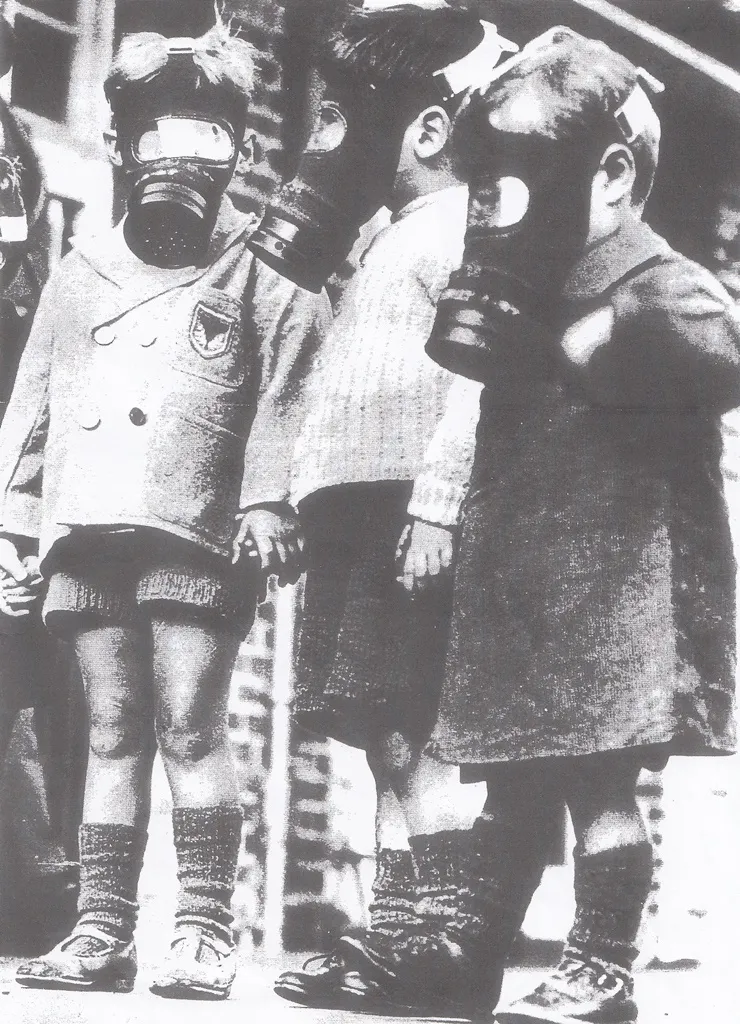
Children at Ruthin School Wearing Gas Masks
Rubber and Metal Components
The child’s gas mask from World War II was constructed with durable rubber and metal components to ensure protection against potential gas attacks. The rubber material provided a comfortable and secure fit for children, while the metal components added sturdiness to the design, ensuring the mask remained intact during use.
Filter and Breathing Mechanism
The gas mask featured a reliable filter and breathing mechanism, allowing children to breathe safely in the event of a gas attack. The filter effectively removed harmful particles from the air, while the breathing mechanism facilitated smooth inhalation and exhalation, preventing the inhalation of toxic substances.
Mickey Mouse Gas Mask
The child’s gas mask, often referred to as the “Mickey Mouse” mask, despite its dissimilarity to the cartoon character, was specifically designed to appeal to children. The mask’s playful design, resembling a character’s face, aimed to alleviate fear and make wearing the maskless daunting for young wearers. This thoughtful approach contributed to the mask’s acceptance among children during a challenging time.
Production and Distribution
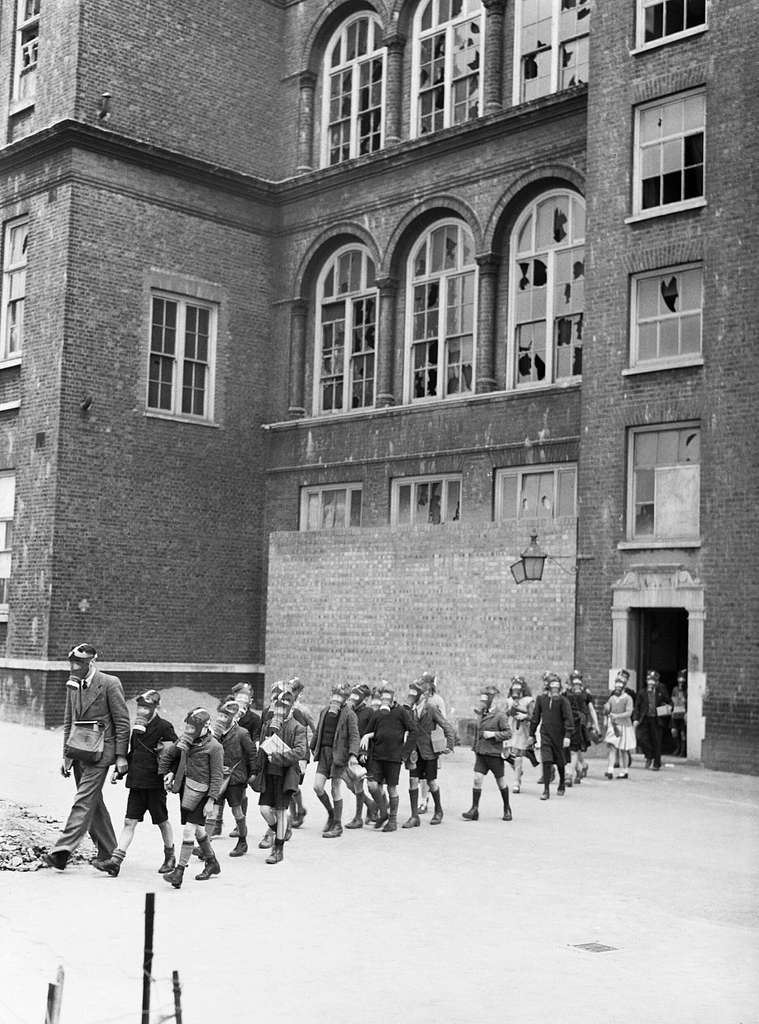
A Teacher Leading His Students for a Gas Mask Drill
Manufacturing Process
During World War II, the British government issued gas masks to all children as a precaution against possible poison gas attacks by the Germans. The gas masks were made of black rubber and used a filter to take out the gas. The manufacturing process involved cutting the rubber and assembling the mask components. The masks were then tested for airtightness and issued to civilians.
Government Issuance to Civilians
The government issued gas masks to all civilians at the start of World War II. The distribution of gas masks was a major logistical challenge, as there were over 38 million people in the UK at the time. The government issued gas mask boxes to each person, which contained a gas mask and a set of instructions on how to use it. The boxes were colour-coded based on the age of the person, with red boxes for adults and blue boxes for children.
The government issued regular updates on the use of gas masks and how to maintain them. The instructions included how to put on and take off the gas mask, how to test its airtightness, and how to care for the mask. The government also issued replacement filters and provided advice on how to dispose of used filters.
Usage and Instructions
https://youtu.be/CHCRlN-JYF8
Fitting and Wearing the Mask
The Child’s WW2 Gas Mask Box was designed to protect children from gas bombs that could be dropped during air raids. The mask was made of rubber and had a filter attached to it. The box contained the mask, a piece of tape to secure it to the face, and a strap for carrying it on the shoulder. Children were instructed to keep their masks with them at all times and were the key item of luggage for evacuees.
To fit and wear the mask, the child had to remove the mask from the box and unfold it. The child then had to put the mask over their nose and mouth and hold it in place with one hand. With the other hand, the child had to pull the elastic strap over their head and adjust it until the mask was snug against their face. Finally, the child had to stick a piece of tape over the chin to ensure a tight seal.
Role of ARP Wardens
ARP (Air Raid Precautions) Wardens played a crucial role in ensuring that children were wearing their gas masks correctly. They were responsible for conducting gas mask drills and ensuring that everyone had a mask and knew how to use it. ARP Wardens also helped to distribute the gas masks and check that they were in good condition.
Public Awareness Campaigns
The government launched a series of public awareness campaigns to encourage people to use their gas masks. Posters were put up all over the country with slogans such as “Put on your mask and live” and “Your gas mask is your life insurance”. These campaigns were successful in persuading people to carry their gas masks with them at all times and to use them when necessary.
Overall, the Child’s WW2 Gas Mask Box played a vital role in protecting children from gas bombs during air raids. The fitting and wearing of the mask was a straightforward process, and the role of ARP Wardens was crucial in ensuring that children were using their masks correctly. The public awareness campaigns helped to raise awareness of the importance of gas masks and encouraged people to use them when necessary.
The Gas Mask Box
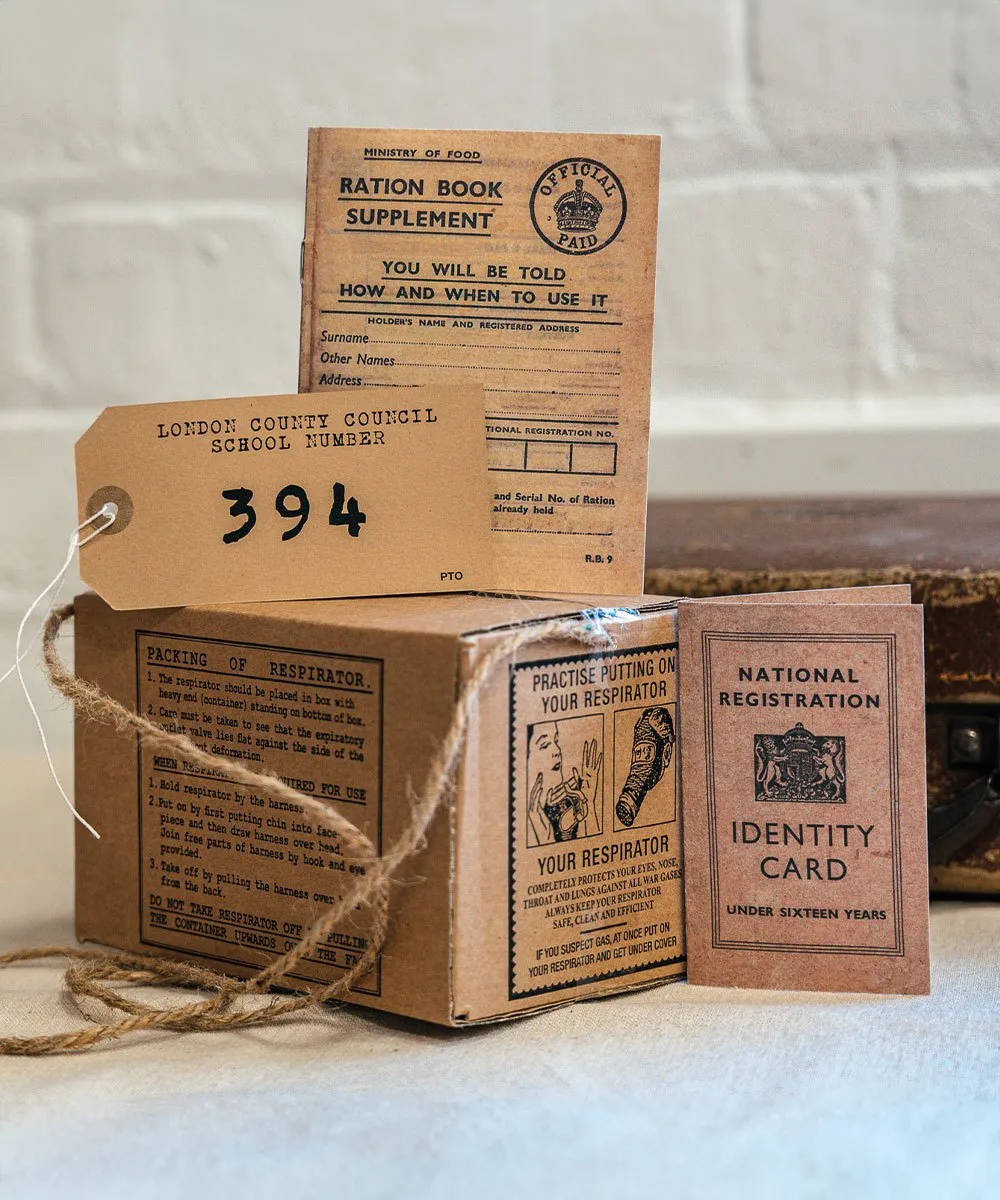
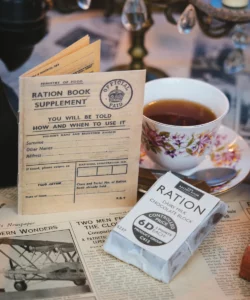
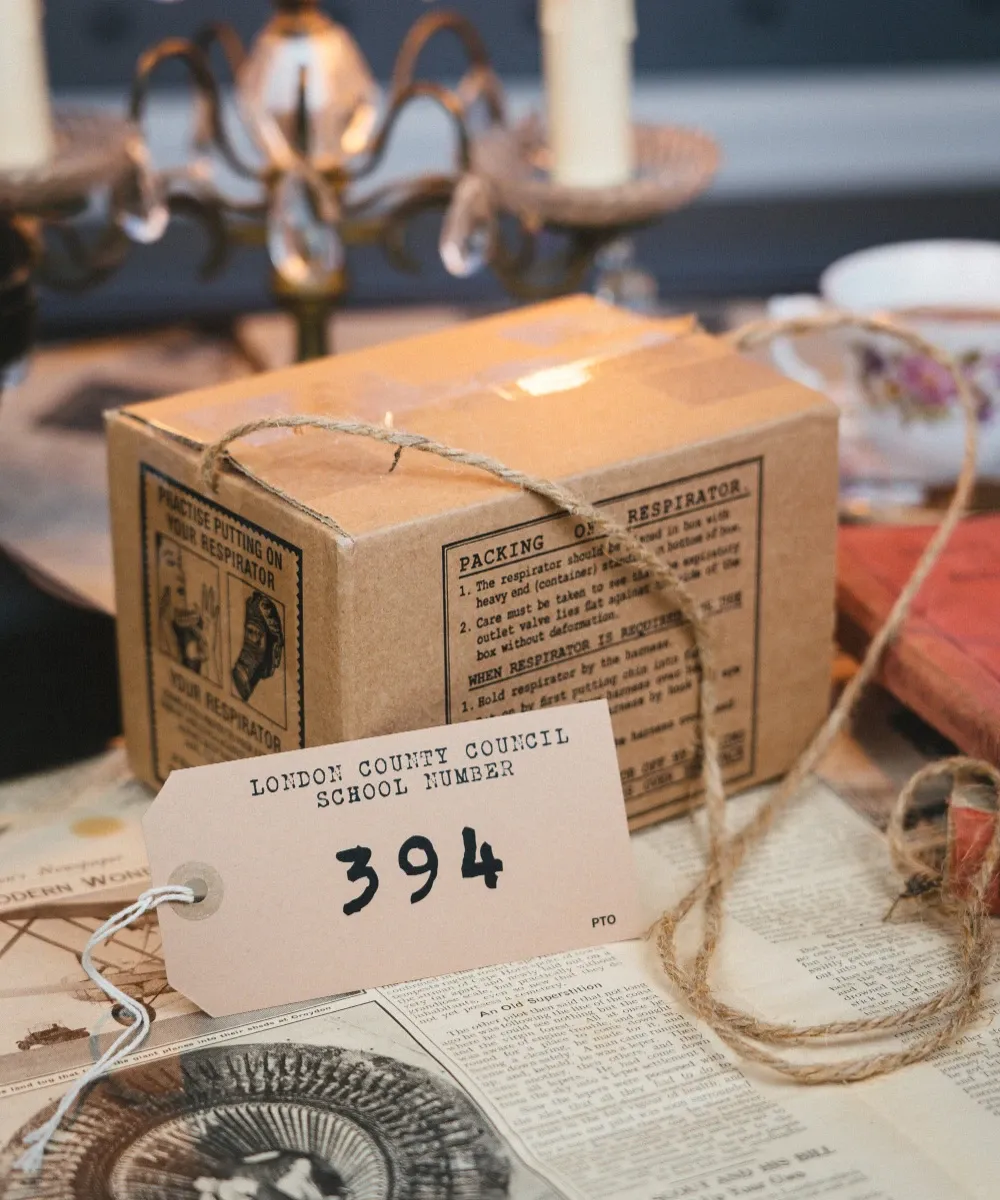
A Child’s Gas Mask Box, Ration Book Supplement, Identity Card and London Borough ID Label
During World War II, gas masks were issued to every citizen in the United Kingdom to protect them from potential gas attacks. Children were also issued with gas masks and their own individual gas mask box. The gas mask box was an important part of the gas mask ensemble, as it was used to store and carry the gas mask when not in use.
Materials and Construction
The gas mask box was made of cardboard and was designed to be lightweight and easy to carry. The box was approximately 30cm x 15cm x 10cm and was coated with a waterproof material to protect the gas mask from moisture. The box was also designed to be self-assembled, with simple instructions provided to help children put it together.
Carrying and Storage
The gas mask box was designed to be carried by children at all times when they were away from home. It was small enough to fit into a school bag or backpack and had a shoulder strap to make it easier to carry. The box was also designed to be stored under the child’s bed when not in use, so that it would be easily accessible in the event of an air raid.
Identification and Address Labelling
Each gas mask box was labelled with the child’s name, address, and school. This was to ensure that the child could be identified in the event of an air raid, and to help reunite them with their family if they were separated. The label also included the child’s gas mask size, which was important as there were different sizes of gas masks for different age groups.
Related Posts:
Health and Safety Concerns
Asbestos in Filters
During World War II, gas masks were issued to civilians to protect them from poison gas attacks. The filters used in these gas masks contained asbestos, which was thought to be an effective material for filtering out harmful gases. However, asbestos is now known to be a dangerous substance that can cause serious health problems, including lung cancer and mesothelioma.
It is important to note that not all gas mask filters contained asbestos. The type of filter used depended on the manufacturer and the date of production. However, it is estimated that up to 70% of gas mask filters contained asbestos.
Long-Term Effects of Usage
The long-term effects of using gas masks during World War II are not fully understood. However, it is known that prolonged use of gas masks can lead to a number of health problems. These include respiratory problems, skin irritation, and eye irritation.
In addition to the health risks associated with the masks themselves, there were also concerns about the precautions that people took when using them. For example, some people would wear their masks for long periods of time, even when there was no immediate threat of a gas attack. This could lead to a false sense of security and could result in people failing to change their filters when necessary.
Overall, while gas masks were an important tool for protecting civilians during World War II, there were significant health and safety concerns associated with their use. It is important to remember that the dangers of asbestos were not fully understood at the time, and that precautions were not always taken to ensure the safety of those using the masks.
Cultural Impact and Legacy
Gas Masks in Popular Culture
The use of gas masks during World War II has had a lasting impact on popular culture. The image of a child wearing a gas mask has become an iconic symbol of the war and has been featured in numerous films, TV shows, and books. The gas mask has also been used in fashion, with designers incorporating the shape and style of the mask into their clothing and accessories.
One example of the gas mask’s presence in popular culture is the British television series, “Dad’s Army.” In an episode titled “The Two and a Half Feathers,” the characters are seen wearing gas masks during a practice drill. The gas mask has also been featured in films such as “Hope and Glory” and “The Boy in the Striped Pyjamas,” where it serves as a reminder of the horrors of war.
Educational Value and Museums
In addition to its cultural impact, the child’s gas mask box has educational value. Museums around the world display the gas mask as a historical artefact, allowing visitors to learn about the experiences of children during World War II. The Imperial War Museum in London, for example, has a collection of gas masks on display, including the child’s gas mask box.
The gas mask has also been used as a teaching tool in schools. Teachers can use the mask to help children understand the realities of war and the measures taken to protect civilians. The gas mask drill, in which children were taught how to properly wear and use the mask, was a common practice in schools during World War II.
Overall, the child’s gas mask box has left a lasting legacy on both popular culture and education. Its presence in museums and schools serves as a reminder of the hardships faced by children during World War II and the measures taken to protect them.
Frequently Asked Questions
What is the typical value of a child’s gas mask box from WW2 in the UK?
The value of a child’s gas mask box from WW2 in the UK can vary depending on its condition, rarity, and historical significance. Some boxes may be sold for as little as £20, while others may sell for hundreds of pounds. It is recommended to consult with an appraiser or a reputable antique dealer to determine the value of a specific gas mask box.
Where can one purchase a child’s WW2 gas mask box replica in the UK?
Child’s WW2 gas mask box replicas can be found on our online shop here.
What was the purpose of gas masks for children during WW2?
The purpose of gas masks for children during WW2 was to protect them from the effects of gas attacks. Gas masks were issued to all children as a precaution against the possibility of gas attacks by the enemy. They were designed to filter out harmful gases and protect the wearer’s eyes and face.
What items were commonly included in a child’s gas mask box during WW2?
A child’s gas mask box during WW2 commonly included a gas mask, a gas mask filter, an identity card, a string for carrying the gas mask box, and a booklet with instructions on how to use the gas mask. Some gas mask boxes also included a small tin of anti-gas ointment and a box of anti-gas tablets.